
The FROM Paradox: Why the Sci-Fi Label is a Debt the Writers Haven’t Paid
The MGM+ hit series FROM has the internet in a chokehold, but as we move further into the FROM paradox, a glaring issue is emerging for fans who value internal logic. We are being sold a science fiction masterpiece, but the writers are flirting dangerously close to the “magic and supernatural” trap that swallowed LOST whole. As a filmmaker and a creator who prioritize facts that yield results in reality, I have to point out the elephant in the room: Where is the science in this fiction?
The “Four-Wheel” Mandate and the Spatial Grid
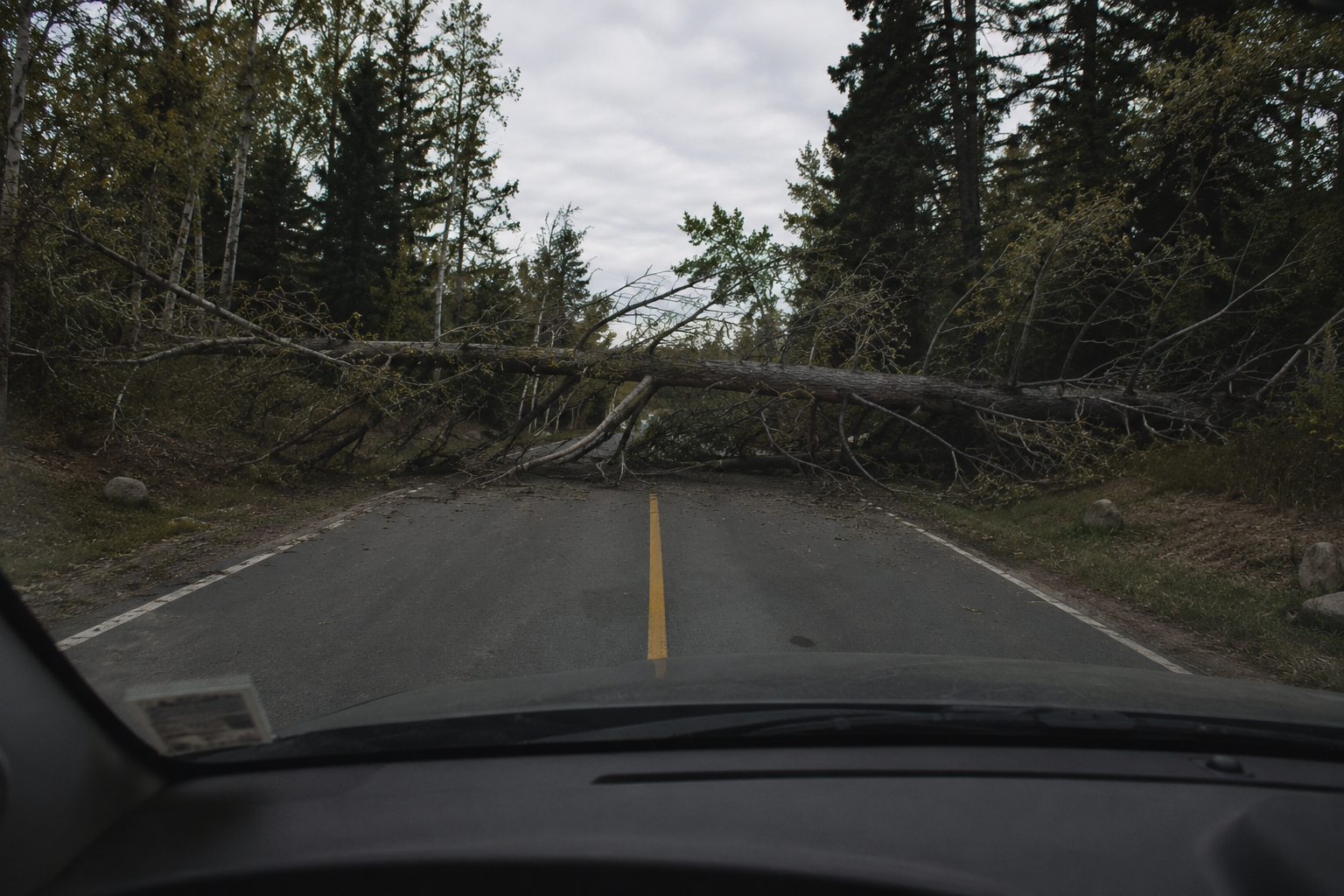
The most undeniable fact on camera is the entry requirement. Every single arrival in that town follows a strict mechanical protocol. I mean we got cars coming from all different locations—Texas, Detroit, wherever—and they all see a different fallen tree on a different road, yet end up in the exact same spot.
In physics, this isn’t a “vibe”—this is a spatial grid. It screams wormhole mechanics. If you are driving in Michigan and five minutes later you are in a pocket dimension in the middle of nowhere, you have experienced a break in space-time. Why has no one ever entered town other than in a car or truck? We see no walk-ups, no planes fly over, and we never see anyone bike in. There are bikes in the town, but they are likely just props since we never see them being ridden into the town.
This creates a massive logic gap: if the place is “ancient,” how were people getting stuck before cars were invented? The dates carved into the lighthouse—1506, 1609, 1864—suggest a history that predates modern engines by centuries. If the “From” event requires a motor vehicle to trigger in 2026, then the town isn’t just a supernatural curse; it is a system that has specifically tuned itself to modern technology.
Even Tabitha’s return proves the writers are tethered to this car-only rule. She left through a lighthouse and still returned via a vehicle because the writers forced that scene to happen at driving distance from a tree just to make it easier to get her back into town in the same vehicle.
The Sentient Ecosystem: “Avatar” in America
If the writers want to justify that primary sci-fi tag, they need to lean into the biology of the land. I am rooting for a cloaked ufo that lands on a stretch of highway you don’t notice you drive onto, or that the trees and plants are doing a freaky avatar thing right here in America.
There is real science in how trees and fungi communicate through underground networks. The shrooms jade takes could be in cahoots with the town’s roots because the writers confirmed the place is tangible. Plants in the real world use pheromones and chemical signals to communicate and even cause hallucinations in predators. If the forest is a reacting sentient ecosystem taking revenge because humans ran roads through its roots and destroyed the native land, that is a scientific premise.
This “revenge of the land” theory explains the mechanics. The cars represent the industrial encroachment on the earth. The trees aren’t just “scary”; they are a biological defense system. When the road “cuts” the earth, the earth “traps” the road. That is a cause-and-effect relationship that fits the sci-fi definition. If it winds up being “fairies” or a “curse,” then the sci-fi label was just a bait-and-switch for the audience.
The 1506 Timeline and the Evolution of the Trap
The date 1506 is prominent in the show’s lore, carved alongside other years like 1609 and 1978. This date is significant—it is the year Christopher Columbus died and a pivotal moment in the “Age of Discovery.” If the town’s cycle began when Europeans first touched this land, then the “mystery” has been evolving for over 500 years.
But here is the scientific problem: in 1506, there were no roads. There were no cars. So, did the “spatial grid” exist back then? If people were “walking” into the trap in 1506, but now they can only “drive” into it, that implies the science of the town is adaptive. It is reacting to the way humans travel. By forcing the 2026 characters to arrive via vehicle, the writers have created a mechanical rule that they must explain. You cannot have a “primary” sci-fi show where the rules change just because it makes for a better jump scare.
The “Tangible” Cop-Out and the Wires to Nowhere
I will admit the writers said the place is tangible and not someone’s dream, but if the only part that is science is that the place is “tangible,” that is weak. Just being “physical” doesn’t make a story science fiction. Fantasy worlds are “tangible,” but they lack the mechanics of reality.
When Tabitha found the wires running to nothing, that was a “what the…” moment and a perfect opportunity for a scientific reveal. In a sci-fi show, those wires should lead to a power source, a laboratory, or a subterranean organism. If they lead to “magic,” then the writers are just using sci-fi imagery to mask a lack of logical depth. For a show to be “science” fiction, the puzzles must have solutions that respect the laws of physics or biology established on screen.
The Marketing vs. The Narrative Reality
Check the metadata on any major database or the official MGM+ network listing. They list sci-fi as the first ingredient. Much like food ingredient lists, the most important one goes first. The primary genre is the dominant style of the show. By putting sci-fi at the top, the network is making a promise that the mystery is grounded in some form of imagined technology or environmental science.
At this rate, calling FROM “sci-fi” without a scientific payoff is like calling A Nightmare on Elm Street “sci-fi” just to steal fans from the genre audience. Freddy Krueger is a nightmare, but he isn’t sci-fi because there is no mechanical “how” to his existence. If FROM stays in the “ancient nightmare” lane without explaining the wormholes, the moving trees, and the car arrivals, it is a horror show wearing a sci-fi mask.
The Historical Retribution Factor
The “ancient” part of the town suggests this has been happening for centuries, but the “car” part of the town is modern. This implies a targeted evolution. If the land is taking revenge for what colonizers did to the earth, then the trap has evolved alongside the technology of the invaders.
The forest isn’t just taking people; it is taking the tools of civilization. The cars are piled up like a graveyard because they are the “husks” of the industrial world. If the writers ignore the science of the 5-minute jump from different locations, the car arrivals aren’t a mystery—they are just a plot hole.
We are waiting for the writers to justify the “primary” status they claimed. The audience deserves a payoff that is as smart as the setup. If the wires lead to nothing and the trees are just magic, then the mystery isn’t a puzzle to be solved—it’s just a trick. On XZION, we focus on the mechanics of reality, and right now, the mechanics of FROM are in debt to the sci-fi genre.